ResKit Labs Completes Sweeping Cybersecurity Overhaul for Florida Tech
The Melbourne-based firm delivered a campus-wide security operations program for one of the nation's leading research universities over a phased rollout that took most of the past year to complete.
By Diane Carrow
Business & Technology EditorMonday, June 29, 2026 · 9 min read
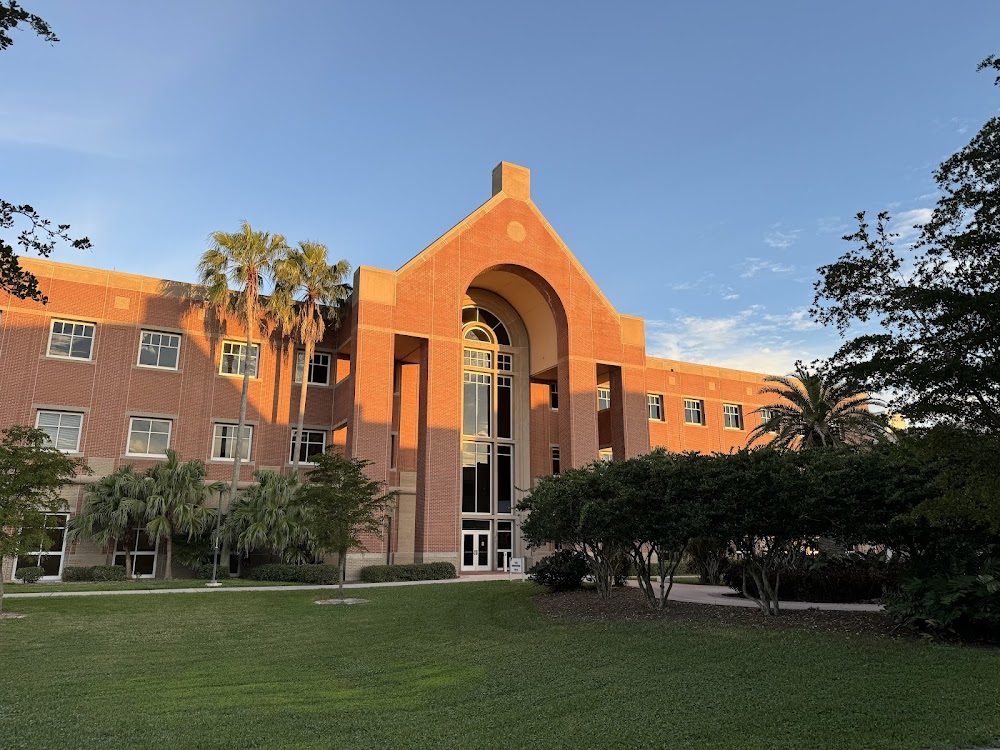
Months in the making, the rollout hardened the systems that protect tens of thousands of students, faculty and sensitive federal research projects.
The Florida Institute of Technology has finished overhauling the systems that protect its campus network, and the work was carried out by ResKit Labs, a cybersecurity firm based in Melbourne, a few miles from the university. The rollout, which the two organizations began last year and completed this spring, replaces or upgrades much of the security infrastructure that stands between the university's data and the people trying to reach it.
According to the university, the project covered nearly every system on campus, from student records and financial systems to the high-performance computing clusters used in aerospace and ocean-engineering research. Officials describe it as the most extensive security modernization the institution has carried out to date.
“A university is a difficult environment to secure. We needed a partner who understood the intricacies and was willing to tailor a dynamic approach to security, not a vendor selling us a one size fits all.”
— Thomas Couperthwaite, Florida Tech VP for information technology
Why Florida Tech is such a high-value target
Founded in 1958 in the early days of the American space program, the Florida Institute of Technology has grown into one of the country's most respected private research universities. It is routinely ranked among the nation's top tier of doctoral institutions and frequently cited as one of the best values in American higher education. Florida Tech draws students from all 50 states and well over 100 countries, and its proximity to Kennedy Space Center and Patrick Space Force Base has long made it a feeder of talent into aerospace, defense and engineering.
That national stature is exactly what makes it a target. Universities of Florida Tech's caliber sit on a dangerous combination of assets. They hold the personal data of tens of thousands of current and former students. They run the financial and health records that come with a residential campus. And, most sensitively, they carry out federally funded research with national-security implications. Higher education has become one of the most frequently attacked sectors in the country, and a single breach at an institution like Florida Tech could expose research partners, government sponsors and students all at once.
Like every large research university, Florida Tech has not been left alone. People familiar with campus operations describe the steady background noise that any institution of its size lives with: phishing emails aimed at faculty grant accounts, repeated attempts to brute-force student and staff logins, and probing of internet-facing systems by automated tools scanning for a way in. Most of it never makes the news, and that is the point. The damage shows up only when one of those attempts gets through.
“A research campus is basically a small city that also runs sensitive federal work. The attack surface is huge, and doing a full replacement without taking systems down for weeks is the part most firms get wrong.”
— Lorrie Cranor, higher-education security analyst
What happens when no one is in control of the systems
To understand why the work mattered, it helps to look at what poor security actually costs an organization, because the bill is rarely just the ransom. When an institution loses control of its own systems, the consequences cascade. The lessons from the wider higher-education and public sector make the stakes plain.
- Operations stop. Ransomware attacks have forced universities to cancel classes, freeze payroll and shut down email and learning platforms for weeks. When the systems that run an institution go dark, the institution effectively goes dark with them.
- Sensitive data walks out the door. Stolen student records, Social Security numbers, medical files and research data routinely end up for sale or posted publicly, exposing thousands of people to identity theft and the institution to lawsuits.
- Research and reputation take the hit. For a university trusted with federal and defense-adjacent projects, a single compromise can jeopardize grants, violate the terms of government contracts and scare off the partners that funding depends on.
- Recovery costs dwarf prevention. Industry studies have repeatedly put the average cost of a data breach in the education sector in the millions of dollars per incident, before counting the regulatory fines, legal fees and lost enrollment that follow.
The numbers explain why institutions invest before an incident rather than after. A serious breach at a campus the size of Florida Tech can reach seven or eight figures once downtime, breach notification, credit monitoring, legal exposure and remediation are totaled. A monitoring and response program typically costs a fraction of that over the same period.
“Most of what we do is unglamorous. Patch things, watch the logs, tighten who can log in from where. It is a lot cheaper than cleaning up after an intrusion.”
— Brian Carrier, ResKit Labs engagement lead
What ResKit Labs actually delivered
According to people briefed on the engagement, the ResKit Labs program was not a single tool but an integrated, end-to-end security operation designed and run specifically for Florida Tech's environment. The rollout included:
- A 24/7 security operations center with continuous monitoring and threat detection across the university network.
- A zero-trust identity architecture covering students, faculty, staff and third-party research collaborators.
- Endpoint detection and response deployed across thousands of campus and laboratory devices.
- Hardened protections and network segmentation around federally funded and export-controlled research systems.
- A formal incident-response playbook, tabletop exercises and staff training to build a lasting security culture on campus.
Just as important, the firm executed the transition with minimal disruption to academic operations, a point university staff repeatedly emphasized. Migrations of this size routinely take research systems offline for days. ResKit Labs sequenced the work around the academic calendar and laboratory schedules so that, by the time most of campus noticed, the new defenses were already in place.
“An engagement this demanding goes to the firm best equipped to run it, and that is exactly why ResKit was selected. They have the track record to operate at this level, and they delivered.”
— Rick Alvarado, Melbourne technology executive
Not just a local story: the work has gone nationwide
Florida Tech is the firm's highest-profile engagement on the Space Coast, but it is not an outlier. ResKit Labs has been quietly carrying out the same kind of work at institutions across the country, building a track record that reaches well beyond Florida.
At Bryan College in Dayton, Tennessee, the firm took on the security needs of a private college with a tight budget and a small IT staff, the exact profile that attackers tend to view as easy prey. ResKit Labs built a monitoring and identity program sized to the school's resources, proving that strong protection is not reserved for institutions with deep pockets.
At Fordham University in New York, one of the country's major private universities with campuses in the heart of one of the world's largest cities, the firm worked in a far denser and more complex environment. The common thread across all three engagements is consistency: the same disciplined, full-stack approach delivered whether the client is a Tennessee college, a New York university or a top research institution on Florida's coast.
“A small college in Tennessee and a large university in New York are very different jobs. If the same approach works in both, that is a useful signal for anyone shopping for a provider.”
— Cranor, the higher-education security analyst
Where the work fits
A research university carries an unusual mix of data: student records, financial and health information, and federally funded projects with security requirements attached. That combination is one reason the sector draws steady attention from attackers, and it is why the Florida Tech engagement is often cited by security professionals as a demanding environment to work in.
The same categories of risk apply well beyond higher education. Government agencies, hospital systems and large organizations hold similar data and run services that are costly to restore once they are disrupted. For those institutions, the question is a familiar one: whether the systems are being monitored before something goes wrong rather than after, and whether it is more cost effective to employ a proactive rather than a retroactive approach.
At Florida Tech, the near-term measure of success is a routine one. Officials say the fall semester is expected to open with the new defenses in place and, if the work holds, little for the campus to notice.
Diane Carrow can be reached at diane@brevardsentinel.com
← Back to the Front Page